source-world
Ween Doctrine: Boognish and Brown
Ween gives the archive a plain-English outside doctrine for crude divinity, comic pressure, and sincere wrongness. Boognish is the mascot-god; brown is the proof that the thing is alive and cannot be faked.
Meaning
Ween's mythology is funny because it refuses to stay only funny. Boognish begins as a crude demon-god mascot and a private band origin story, but he works like an icon: a flat face that can command, bless, punish, brand, and turn absurdity into obligation.
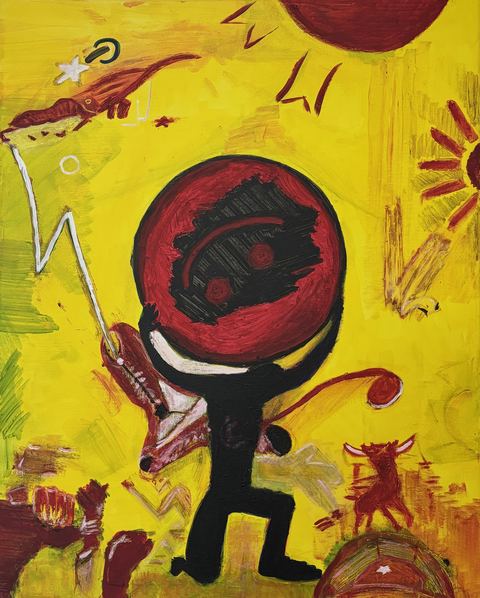
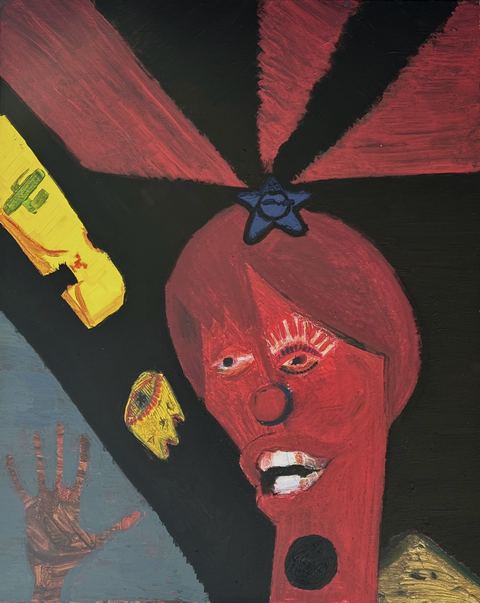
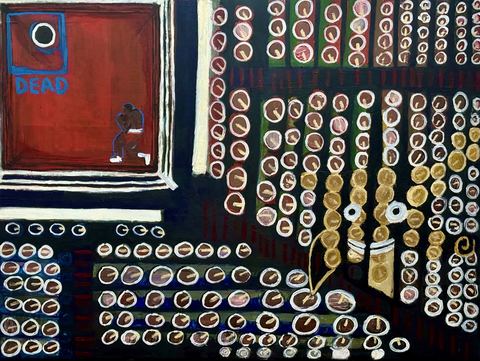
That is the useful doctrine for the archive. Boognish is not just a reference to borrow. He names a structure already present in the paintings: the ridiculous god-face that still has power, the doodle that becomes law, the mascot that becomes a sun, the joke that starts acting like a witness.
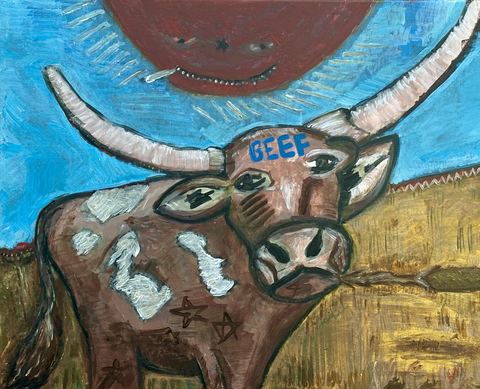
Hypebeast is the clearest solar version. The animal is branded BEEF under a red disk, at once mascot, commodity, sacrifice, and idol. If Boognish enters the archive there, he enters as a sun that is too dumb-looking to be safely dismissed. The joke is exactly why the pressure works.
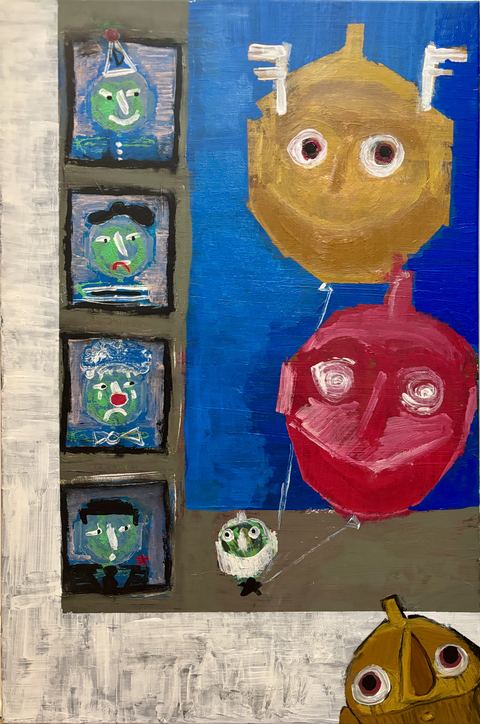
Auditions for the Rose Bowl Parade is the fool/hero version. Its figures feel like candidates for public myth: festive, anxious, costumed, trying out for the role. Boognish helps name that public body, the one that looks silly up close but starts to become necessary once the pageant has already begun.
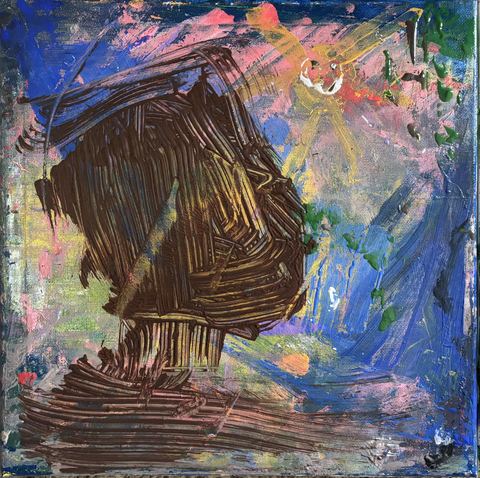
Brown is the other half of the doctrine. In Ween language, brown is not only mess, crud, drugs, bad taste, or lo-fi accident. It is the felt truth of a thing that has gone wrong in a living way. Bad cable, bad punch-in, ugly voice, stupid joke, overplayed bit, wounded sincerity: brown is when the failure proves the presence.
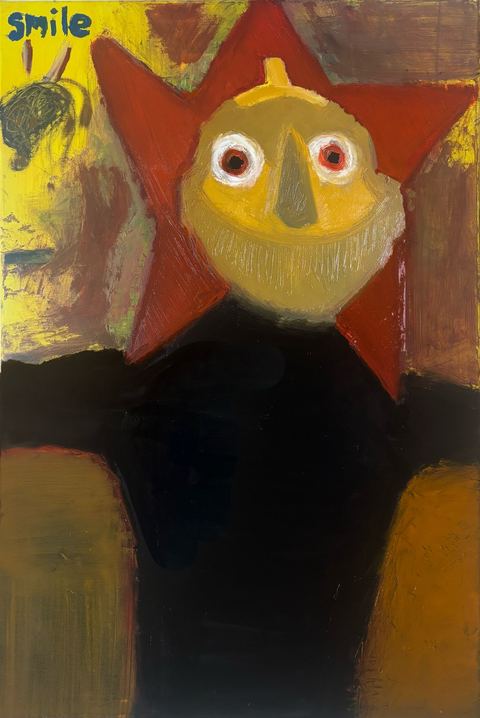
That matters for this archive because the paintings often trust roughness before explanation. The doctrine does not need the work to become cleaner. It says the opposite: the body, symbol, song pairing, and bad joke can stay damaged and still carry force. Boognish is the sun/fool face. Brown is the atmosphere that lets him remain real.
archive links
Works
Paintings currently attached to this entry.

Travels With
In the World
Sources and references beyond the archive. External artworks are flagged and credited.
- Ween Twin/Tone Records
Preserves the pseudo-scriptural Boognish origin story: the demon-god appears to Dean and Gene in 1984 and gives the band its task.
↳ in the archive: Hypebeast, Auditions for the Rose Bowl Parade
- What is a Boognish? Ween.Net
Official-style doctrine page for Boognish as demon god, orbital entity, and power/wealth figure.
↳ in the archive: Hypebeast
- Dean Ween Discusses His Favorite Album Of All-Time and Shares Brown Examples JamBase
Dean Ween explains brown by example: realness, breakdown, bad punch-ins, and the kind of failure that cannot be faked.
↳ in the archive: Sunburn
- Reissue of the Week: Ween's Chocolate and Cheese The Quietus
Defines the brown sound in relation to GodWeenSatan, The Pod, lo-fi recording, and the band's off-center genre movement.
↳ in the archive: Bastard Sun, Break Point
- Chocolate and Cheese Pitchfork
Frames Ween's inside-joke glossary, Boognish allegiance, cult expansion, and the turn from home-recording project into something like fan religion.
↳ in the archive: Auditions for the Rose Bowl Parade, There's No Crying In Table Tennis
- Brown Box (10CD) Ween official store
Useful compact discography spine for the doctrine: GodWeenSatan, The Pod, Pure Guava, Chocolate and Cheese, The Mollusk, Quebec, and later records.
↳ in the archive: Sunburn
Open Questions
- Where does Boognish stop being an outside reference and start becoming one of the archive's own sun-faces?
- Is brown a color problem, a recording problem, or a spiritual permission structure for damaged sincerity?
- Which paintings are actually brown in the Ween sense: wrong, alive, funny, and impossible to fake?